

INTERPOL DataAccess Request
Individuals may submit a data access request to confirm whether their personal data is recorded in INTERPOL's information system. This is often the first step before challenging a Red Notice or diffusion.
Otherside represents clients before the Commission for the Control of INTERPOL's Files (CCF), preparing CCF-compliant access requests and managing NCB restriction issues that can limit disclosure. Where the response suggests grounds to act, we advise on follow-on steps, including deletion requests.
View all INTERPOL legal services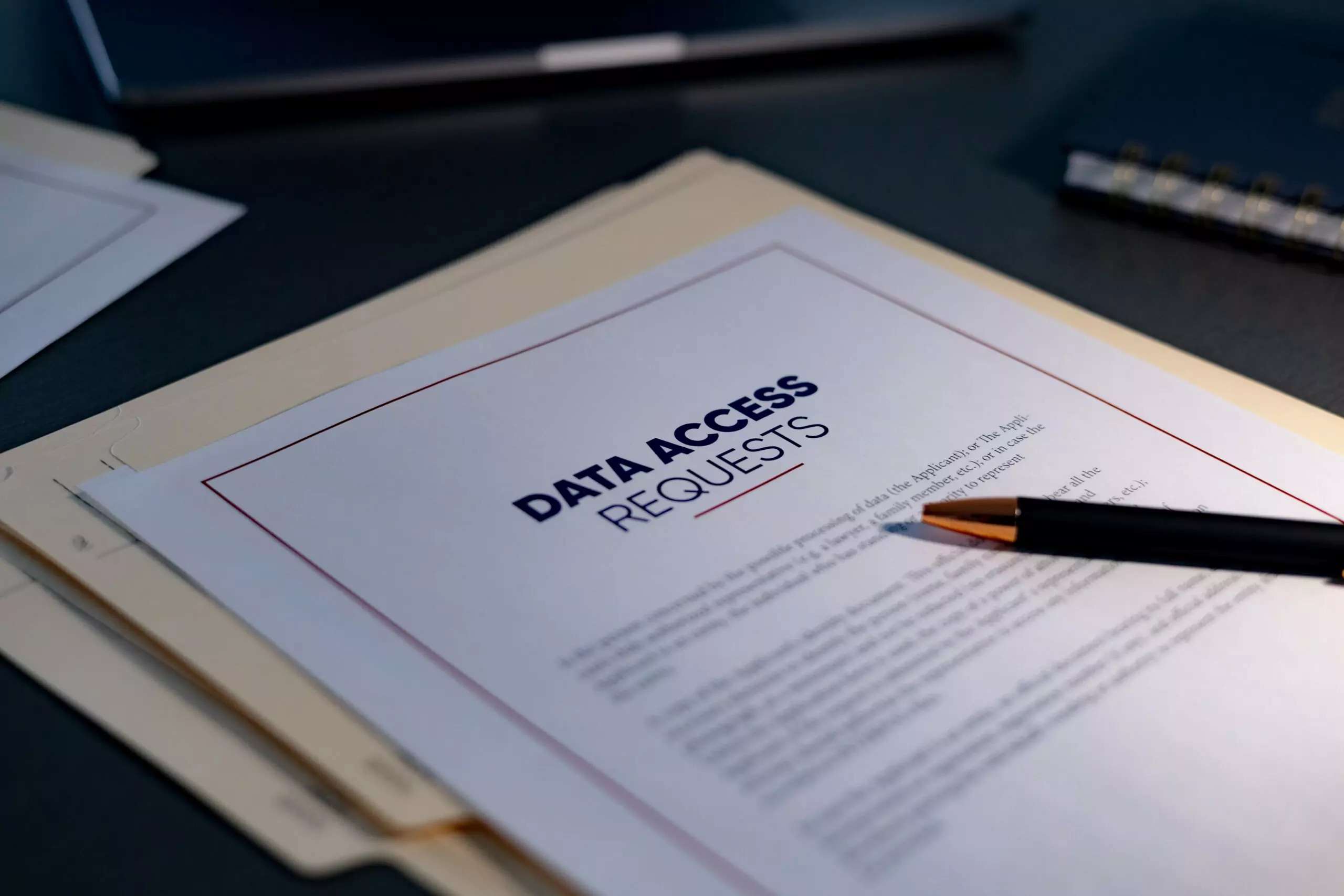
What Is a Data Access Request?
A data access request is a formal submission to the Commission for the Control of INTERPOL's Files (CCF) through which an individual asks whether their personal data is recorded in INTERPOL's information system. The right of access is provided for under the Rules on the Processing of Data (RPD) and is open to any person, regardless of nationality or location.
The access procedure serves a specific purpose: it allows the individual to confirm whether they are the subject of a Red Notice, diffusion, or other form of recorded data. For many clients, this is the first step toward understanding their situation and deciding whether to file a deletion request or seek other remedies before the CCF.
NCB Restrictions on Disclosure
Under Article 35 of the CCF Statute, information connected with a request is in principle accessible to the applicant. Before any disclosure, however, the CCF consults the National Central Bureau (NCB) of the country that recorded the data. The NCB may consent to disclosure, agree to partial disclosure, or restrict communication entirely on one of three grounds: protection of public or national security, confidentiality of an investigation, or protection of the rights of the applicant or third parties. Any restriction must be motivated and justified in the specific case.
According to the CCF's own reporting, over 50 per cent of cases are impacted by NCB restrictions. In 2024, 70 per cent of access requests exceeded the four-month processing benchmark, with extensive exchanges over disclosure restrictions identified as a principal cause of delay. The CCF interprets restrictions strictly and may take unjustified restrictions into account when deciding on the compliance of the data concerned. In practice, a restricted response may confirm only that data exists in INTERPOL's files without disclosing the source country, the type of notice, or the underlying case. Understanding what a restricted response means, and whether there are grounds to challenge the restriction, is often critical to deciding what comes next.
How a Data Access Request Works
All access requests are submitted to the Commission for the Control of INTERPOL's Files (CCF), the independent body responsible for processing requests from individuals concerning data held in INTERPOL's information system.
Submission Through the CCF Portal
Access requests are filed through the CCF's dedicated online portal. The request must include sufficient identity verification to allow the General Secretariat to search its files. We prepare the submission to meet CCF format requirements and ensure all identification documents are properly compiled.
In 2024, access requests accounted for approximately 37 per cent of all admissible requests received by the CCF, out of a record 2,586 total. A properly framed submission reduces the risk of delays caused by incomplete documentation or identity verification issues.
NCB Consultation and Restrictions
Under Article 35 of the CCF Statute, information connected with a request is in principle accessible to the applicant. Before any disclosure, the CCF consults the relevant National Central Bureau (NCB) of the country that recorded the data. The NCB may consent to full disclosure, partial disclosure, or restrict the communication of information entirely on grounds of national security, investigative confidentiality, or the protection of the rights of the applicant or third parties.
Over 50 per cent of cases handled by the CCF are impacted by NCB restrictions. Any restriction must be motivated and justified in the specific case. Where justifications are insufficient, the CCF engages in further exchanges with the NCB, which significantly extends processing times. The CCF interprets restrictions strictly and may take unjustified restrictions into account when assessing the compliance of the data concerned.
Over 50% of cases impacted by restrictionsTimeframe
Under Article 40(1) of the CCF Statute, the Requests Chamber must issue its conclusions within four months from the date the request is declared admissible. Extensions must remain exceptional and require justification. In practice, however, the CCF's 2024 Annual Report shows that only 30 per cent of access requests were finalized within this deadline, and 70 per cent were not.
Delays are driven by several factors: the complexity of the data held, the number of NCBs consulted, and above all the extensive exchanges required when NCBs impose restrictions on disclosure. Cases involving multiple source countries or contested restrictions take significantly longer. We monitor the procedure throughout and follow up where delays arise.
4-month statutory deadline / 70% exceeded in 2024Communication of the Response
The CCF communicates its response directly to the applicant (or their legal representative). The response confirms whether personal data is recorded in INTERPOL's files. Subject to any NCB restrictions, it may also disclose the nature of the data, the type of notice or diffusion, and the source country.
The access response is often the first concrete confirmation that a Red Notice or diffusion exists. Where the response reveals grounds for a challenge, we advise on follow-on steps, including filing a request for deletion or seeking temporary blocking of the data.
Getting the Full Picture
An access request is more than a formality. It is often the starting point for the entire case. How it is handled affects what information is disclosed and what options follow.
Procedural Accuracy
We prepare each access request to meet the CCF's format and identity verification requirements from the outset. Incomplete or improperly formatted submissions lead to delays, requests for supplementary information, or outright rejection. The goal is to file a clean submission that moves through the process without procedural friction.
Monitoring and Follow-Up
Once the request is filed, we track the four-month statutory deadline under Article 40(1) of the CCF Statute and follow up with the CCF where needed. With 70 per cent of access requests exceeding this deadline in 2024, active monitoring ensures the request does not stall and that any additional information requested by the CCF is provided promptly.
Interpreting the CCF Response
The value of an access request often lies in what the response reveals, and what it does not. Where NCB restrictions limit disclosure, we analyze the response in the context of what is already known about the client's situation. Where the response confirms the existence of a Red Notice or diffusion, we advise on whether there are grounds for a deletion request, temporary blocking, or other follow-on steps.
Why Choose Otherside for Data Access
Otherside is a boutique INTERPOL-only law firm based in Marseille, France. Every access request is handled directly by a former CCF Legal Officer with six years inside the Commission, on a transparent fee structure.
Exclusive CCF Practice
The only law firm exclusively focused on INTERPOL matters and CCF proceedings. Access requests, deletion requests, provisional measures, revision applications. Nothing else. Every file handled directly by a former CCF Legal Officer.
About the founderAddressing NCB Restrictions
NCB restrictions are one of the most common obstacles in access proceedings. They can reduce the response to a bare confirmation. Otherside anticipates these restrictions, advises on what they mean, and where appropriate, challenges them to obtain fuller disclosure.
View servicesFrom Access to Action
An access request is rarely the end. Where the response confirms a Red Notice or diffusion, follow-on options are advised immediately: deletion request, temporary blocking, coordination with local counsel. Access is built as the foundation for what comes next.
Red Notice removalTransparent Fees
Free 30-minute consultation where the file falls within scope. Fixed fee for the substantive work, quoted upfront. No hidden charges, no hourly billing surprises on access work.
View fee structureAlready have the data? Check your grounds with the INTERPOL Removal Grounds Tool.
If your access request has confirmed a Red Notice or diffusion, the next question is what grounds support a deletion request. A short questionnaire that maps your situation against the grounds available under INTERPOL's rules and the CCF's published practice. Free, confidential, three minutes.
Need a Data Access Request?
Otherside prepares and files CCF-compliant access requests, interprets the response, and advises on follow-on steps where the file confirms a Red Notice or diffusion. A free 30-minute Zoom consultation is offered where the firm's criteria for representation are met.
Questions on Data Access Requests
Who can file a data access request?
Any individual, regardless of nationality or country of residence. The right of access under INTERPOL's Rules on the Processing of Data is open to any person who wants to confirm whether their personal data is recorded in INTERPOL's information system. The request is filed directly with the CCF; there is no requirement to go through a lawyer, though legal assistance helps navigate identity verification, NCB restrictions, and follow-on steps.
How long does the CCF take to respond?
Article 40(1) of the CCF Statute sets a four-month deadline from the date the request is declared admissible. In practice, the CCF's 2024 Annual Report shows that seventy per cent of access requests exceeded this deadline, with delays driven largely by extensive exchanges over NCB restrictions. Active follow-up during the procedure is often what keeps a request moving.
Is there a fee for filing an access request?
No. The CCF does not charge applicants for filing or processing an access request. Costs arise only where an applicant chooses to be represented by counsel.
What will the CCF tell me in the response?
The scope of the response is governed by the restrictions the relevant National Central Bureau imposes, if any. Where the NCB allows full disclosure, the CCF communicates whether personal data is recorded, the nature of that data (Red Notice, diffusion, or other record), the source country, and certain details of the underlying case. Where a total restriction of communication is imposed, the response is generic and does not confirm or deny whether data concerning the applicant is recorded in INTERPOL's files at all.
What is an NCB restriction and how does it affect my response?
Under Article 35 of the CCF Statute, the National Central Bureau of the country that recorded the data is consulted before disclosure. The NCB may agree to full or partial disclosure, or may restrict communication on three grounds: protection of public or national security, confidentiality of an investigation, or protection of the rights of the applicant or third parties. Any restriction must be motivated. The CCF interprets restrictions strictly and can take unjustified ones into account when assessing the compliance of the data concerned.
What happens after I receive the CCF response?
The response is the foundation for whatever comes next. Where it confirms a Red Notice or diffusion and reveals grounds for challenge, the follow-on routes include a request for deletion before the CCF, a temporary blocking application under Article 37 of the CCF Statute where there is an immediate risk, or coordination with local counsel on domestic proceedings connected to the underlying case.